

TWI logo The Washington Institute for Near East Policy
logo
wordmark
Homepage

Main navigation

  • Analysis
  • Experts
  • About
  • Support
  • Maps & Multimedia
Trending:
  • Military & Security
  • Energy & Economics
  • Iran
  • Lebanon
  • Gulf States

Regions & Countries

  • Egypt
  • Gulf States
  • Iran
  • Iraq
  • Israel
  • Jordan
  • Lebanon
  • North Africa
  • Palestinians
  • Syria
  • Turkey

Issues

  • Arab & Islamic Politics
  • Arab-Israeli Relations
  • Democracy & Reform
  • Energy & Economics
  • Great Power Competition
  • Gulf & Energy Policy
  • Military & Security
  • Peace Process
  • Proliferation
  • Terrorism
  • U.S. Policy
TWI English
TWI Arabic: اللغة العربية Fikra Forum

Breadcrumb

  • Policy Analysis

U.S. Policy

Policy Analysis on U.S. Policy

Filter by:

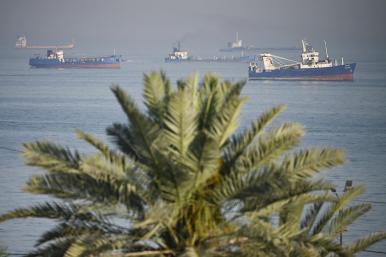
Ships gather in waters off the Iranian island of Bandar Abbas along the Strait of Hormuz - source: Reuters
Articles & Testimony
How to Isolate Tehran
To reopen the Strait of Hormuz after the latest dip in the Iran roller coaster, the Trump administration will need to marry renewed blockade efforts with a more collective-minded diplomatic approach.
Jul 17, 2026
◆
  • Dennis Ross
Newly elected Lebanese president Joseph Aoun reviews soldiers at the presidential palace in Beirut - source: Reuters
Brief Analysis
Previewing the Trump-Aoun Meeting: A Make-or-Break Moment for the Israel-Lebanon Agreement
Circumstances are ripe for a successful visit, but both presidents are looking for more than bonhomie—Aoun needs practical U.S. commitments of operational and financial support, while Trump needs additional evidence of Beirut’s seriousness on disarming Hezbollah.
Jul 16, 2026
◆
  • Robert Satloff
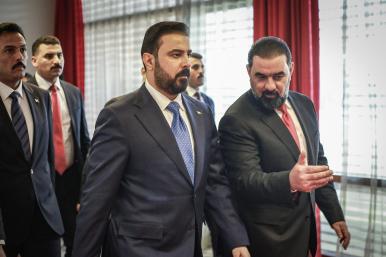
Haibat al-Halbousi (R), Speaker of the Iraqi Parliament, welcomes Iraqi Prime Minister-designate Ali al-Zaidi (L) at the parliament building ahead of a parliamentary session for a confidence vote on the cabinet formed by al-Zaidi - source: Reuters
Articles & Testimony
Mr. Al-Zaidi Goes to Washington
Despite significant progress, Iraq still has a long way to go to meet the Trump administration’s expectations for reining in Iranian influence.
Jul 13, 2026
◆
  • David Schenker
France's President Macron greets the UAE's President Mohamed bin Zayed at the 2026 G-7 summit - source: Reuters
Articles & Testimony
An Emerging International Partnership Is Succeeding
By incorporating Ukraine and other like-minded states from the Middle East and Asia, the G7 Summit highlighted the net progress made on countering Iranian, Russian, and Chinese threats to the American-led global security and economic system.
Jun 24, 2026
◆
  • James Jeffrey
Donald Trump addresses the inaugural meeting of the Board of Peace in Washington, DC - source: Reuters
Articles & Testimony
The Board of Peace: Between Ambition and Distraction
An in-depth look at why the board’s lack of progress in Gaza makes it unlikely to serve its envisioned role of resolving conflicts around the world.
June 2026
◆
  • Ghaith al-Omari
A photo illustration shows US and Iranian flags and an atomic symbol - source: Reuters
Articles & Testimony
This Is Not a Grand Bargain With Iran. Good.
Although the United States and the world needed shipping to resume through the Strait of Hormuz, negotiating a nuclear agreement is not a postwar priority.
Jun 18, 2026
◆
  • Michael Singh
U.S. and Israeli cabinet members meet at the White House - source: The White House
Articles & Testimony
Don’t Mistake Friction for a Broken Alliance with Israel
Presidential spats with Israeli prime ministers are nothing new, and scapegoating America’s most capable ally in the Middle East would mean more work for U.S. forces, not less.
Jun 16, 2026
◆
  • Michael Singh
A US Navy F-18 lands on a carrier flight deck - source: Department of Defense
Articles & Testimony
The Middle East Power Paradox: How the Iran War Will Transform America’s Military Role
Although the U.S. military approach to the region has delivered many operational successes, the Iran war has exposed its serious shortcomings and created new challenges.
Jun 16, 2026
◆
  • Dana Stroul
Chart showing attack numbers by different Islamic State "provinces."
Maps & Graphics
Brief Analysis
Tracking the Islamic State: Activity Trends, African Shifts, and U.S. Dormancy
As a landmark tool for monitoring the group’s activity hits another sobering milestone, U.S. officials cannot let regional crises completely overshadow important shifts in jihadist threats around the world.
Jun 11, 2026
◆
  • Aaron Y. Zelin
Brief Analysis
Rethinking Foreign Assistance Cuts That Endanger U.S. Interests
Despite President Trump’s transformative goals in the Middle East and the ongoing need for American help in weathering multiple regional crises, the new budget request doubles down on a range of problematic funding cuts.
Jun 8, 2026
◆
  • Alina Romanowski
  • Ben Fishman
  • Michael Jacobson
Photo of an Islamic State car bomb attack in Mayadin, Syria, May 2025.
Brief Analysis
A Counterterrorism Strategy Disconnected from the Terrorist Landscape
In focusing on cartels and gangs in the Western Hemisphere as well as left-wing extremists, the administration's “radical shift” elides certain threats from the Middle East along with the political right, while appearing to write off diplomacy and capacity building as key tools.
May 15, 2026
◆
  • Michael Jacobson
USS Boxer leads U.S. Navy ships transiting the Strait of Hormuz - source: Department of Defense
Brief Analysis
How to Accomplish U.S. Objectives in Iran
An agreement to open the Strait of Hormuz in exchange for lifting the U.S. blockade could make it easier to ultimately address more complex issues such as Iran’s uranium stockpile, missile program, and support for proxies.
May 14, 2026
◆
  • Michael Singh
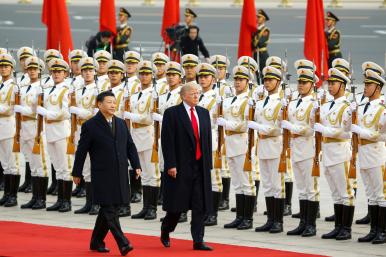
Chinese president Xi walks with U.S. president Trump in Beijing in 2017 - source: Reuters
Brief Analysis
Trump’s China Trip: Implications for the Middle East and Beyond
The first presidential visit to China in nearly a decade will cover trade, technology, and a range of other bilateral topics, including frank conversations on Middle East subjects such as Beijing’s support to Iran and the wider global repercussions of the Strait of Hormuz crisis.
May 13, 2026
◆
  • Grant Rumley
  • Henry Tugendhat
  • Elizabeth Dent
  • Anna Borshchevskaya
  • Souhire Medini
Emergency personnel respond to a terrorist knife attack in London in 2026 - source: Reuters
Articles & Testimony
The U.S. Shouldn’t Lose Sight of the Real Terrorist Threats
From releasing its long-delayed CT strategy document to filling crucial professional vacancies, the administration needs to publicly clarify that countering terrorism—Iranian and otherwise—remains a top national security priority.
May 4, 2026
◆
  • Michael Jacobson
Articles & Testimony
Iran’s Support for Russia and Lessons Learned from Ukraine
By taking urgent steps to institutionalize the wartime partnerships formed with (and between) Ukraine, the Gulf states, and Syria, Congress can strike heavy long-term blows against hostile Russian influence in the Middle East.
Apr 21, 2026
◆
  • Aaron Y. Zelin
Vice President Vance arrives in Pakistan for talks with Iranian counterparts in April 2026 - source: Reuters
Video
Brief Analysis
Moving from War to Diplomacy: What’s Next for Iran, Lebanon, and Gaza?
Amid major diplomatic milestones and major international security threats, three experts explore what it will take to achieve success on multiple negotiating tracks at once.
Apr 16, 2026
◆
  • Michael Herzog
  • Robert Satloff
  • Hanin Ghaddar
Articles & Testimony
In Iran Negotiations, the White House’s Military Options Are Dwindling
Rather than pushing for the unrealistic goal of reaching a comprehensive deal in two weeks, the Trump administration should take the necessarily more patient approach of working through America’s strong network of allies to strengthen its hand.
Apr 14, 2026
◆
  • Dana Stroul
A photo illustration depicts chess pieces and the Iranian and U.S. flags - source: Reuters
Articles & Testimony
How Trump Could Still Get a Strategic Win from the Iran War
As long as the Strait of Hormuz is fully reopened and enriched uranium is shipped out, ending the war quickly may be Washington’s best bet, since Tehran would be left to deal with dire domestic problems it has no answer for.
Apr 9, 2026
◆
  • Dennis Ross
A photo illustration depicts chess pieces and the Iranian and U.S. flags - source: Reuters
Video
Brief Analysis
Diplomacy During War: Priorities for the Trump Administration
Three former U.S. policy practitioners experienced in negotiating with Iran discuss what kind of agreement is possible, what each side may require to make it happen, and how officials in Washington, Israel, the Gulf states, and Europe should address emerging differences in their objectives.
Apr 3, 2026
◆
  • Emily Harding
  • Richard Nephew
  • Michael Singh
  • Nancy A. Youssef
Articles & Testimony
The Middle East After the Iran War: Lessons and Outcomes
However the conflict ends, it has already delivered pivotal lessons on U.S. military innovation and political strategy, the continued dominance of hydrocarbons, the future posture of regional and external powers, and more.
Mar 2026
◆
  • James Jeffrey

Pagination

  • Current page 1
  • Page 2
  • Page 3
  • Page 4
  • Page 5
  • Page 6
  • Page 7
  • Page 8
  • Page 9
  • …
  • Last page Last »
  • Next page Next ›
Supported by the

Diane and Guilford Glazer Foundation Program on Great Power Competition and the Middle East

The Diane and Guilford Glazer Foundation Program on Great Power Competition and the Middle East focuses on the region as a setting for heightened competition between the United States and other world powers, such as China and Russia.

Sign Up for Email Updates from The Washington Institute

Never miss a breaking event on U.S. policy interests in the Middle East. Customize your subscription to our expert analysis, op-eds, live events, and special reports.


Sign up

Featured experts

Robert Satloff - source: The Washington Institute
Robert Satloff
Robert Satloff is the Segal Executive Director of The Washington Institute, a post he assumed in January 1993.
Ambassador Dennis Ross
Dennis Ross
Dennis Ross, a former special assistant to President Barack Obama, is the counselor and William Davidson Distinguished Fellow at The Washington Institute.
Dana Stroul
Dana Stroul
Dana Stroul is Director of Research and Shelly and Michael Kassen Senior Fellow at The Washington Institute for Near East Policy.
Michael Singh
Michael Singh
Michael Singh is the Managing Director and Steven D. Levy Senior Fellow at The Washington Institute.
Background image with TWI branding
logo
wordmark
Homepage

1111 19th Street NW - Suite 500
Washington D.C. 20036
Tel: 202-452-0650
Fax: 202-223-5364

Footer contact links

  • Contact
  • Press Room
  • Subscribe

The Washington Institute seeks to advance a balanced and realistic understanding of American interests in the Middle East and to promote the policies that secure them.

The Institute is a 501(c)3 organization; all donations are tax-deductible.

Footer quick links

  • About TWI
  • Support the Institute
  • Alumni

Social media

  • The Washington Institute on Facebook facebook
  • The Washington Institute on X x
  • The Washington Institute on YouTube youtube
  • The Washington Institute on LinkedIn linkedin

© 2026 All rights reserved.

Footer

  • Employment
  • Privacy Policy
  • Rights & Permissions