TWI logo The Washington Institute for Near East Policy
logo
wordmark
Homepage

Main navigation

  • Analysis
  • Experts
  • About
  • Support
  • Maps & Multimedia
Trending:
  • Military & Security
  • Energy & Economics
  • Iran
  • Lebanon
  • Gulf States

Regions & Countries

  • Egypt
  • Gulf States
  • Iran
  • Iraq
  • Israel
  • Jordan
  • Lebanon
  • North Africa
  • Palestinians
  • Syria
  • Turkey

Issues

  • Arab & Islamic Politics
  • Arab-Israeli Relations
  • Democracy & Reform
  • Energy & Economics
  • Great Power Competition
  • Gulf & Energy Policy
  • Military & Security
  • Peace Process
  • Proliferation
  • Terrorism
  • U.S. Policy
TWI English
TWI Arabic: اللغة العربية Fikra Forum

Breadcrumb

  • Policy Analysis

Democracy & Reform

Policy Analysis on Democracy & Reform

Filter by:

Articles & Testimony
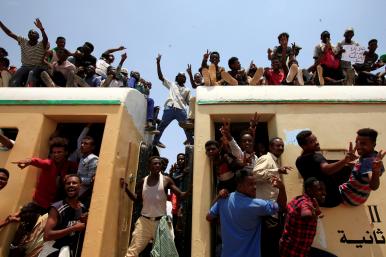
Who Gets to Shape Sudan’s Political Future?
As the army, the RSF, and civilian forces debate this question, the international Quintet faces growing obstacles to building an inclusive political process.
Aug 26, 2026
◆
  • Areig Elhag
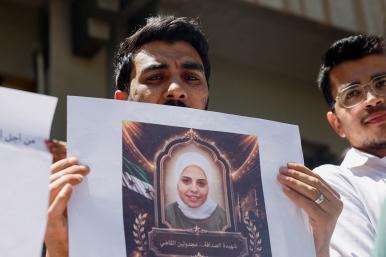
Photo of Syrians holding a memorial protest for family members killed by the former Assad regime.
Brief Analysis
Assad’s Speech Laws Are Putting Syria’s Security and Reconstruction at Risk
With Assad-era laws increasingly triggered by private complaints and enforced unevenly, U.S. officials can no longer relegate these issues to secondary tracks or assume that core administration objectives will remain unaffected.
Aug 28, 2026
◆
  • Aaron Y. Zelin
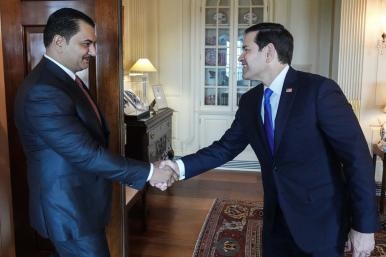
Photo of Marco Rubio shaking hands with Sadaam Haftar.
Articles & Testimony
Libya Needs Elections, Not Another Leadership Selection
Libyans are fed up with temporary solutions, but Washington’s current approach is structured to be just that—another transitional phase that lets political elites keep postponing elections and reform.
Aug 21, 2026
◆
  • Ben Fishman
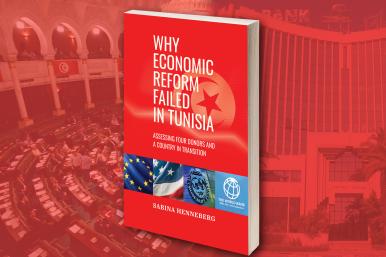
Against parliamentary hall backdrop, book cover includes Tunisian flag imagery at top, EU, USA, IMF, World Bank imagery at bottom.
Maps & Graphics
In-Depth Reports
Why Economic Reform Failed in Tunisia:
Assessing Four Donors and a Country in Transition
International actors, while expressing confidence in the country’s political progress, struggled to adapt to economic resistance from the national labor union, the destabilizing effects of terrorism, and interference from outside actors.
Aug 19, 2026
◆
  • Sabina Henneberg
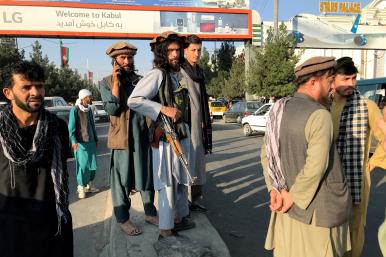
Photo showing Taliban fighters outside Kabul Airport, August 2021.
Maps & Graphics
Brief Analysis
Five Years of Taliban Diplomacy: Recognition Without Concessions
The Taliban has learned that it can reap substantial international rewards without budging on key security and human rights issues, but Washington can still exert pressure on crucial soft spots such as UN credentialing, Treasury Department licensing, and Central Asian project financing.
Aug 18, 2026
◆
  • Aaron Y. Zelin
Brief Analysis
Russia Is Not Leaving Syria
While it no longer enjoys primacy in Damascus, the Kremlin has proven itself able to adapt to the new reality, and Washington must play the long game in response.
Jul 27, 2026
◆
  • Anna Borshchevskaya
Flag of Tunisia
Articles & Testimony
Five Years After Saied’s Power Grab, Tunisia Is Isolated and Unmoored
Even as the country's president shuns outside support, Western actors can use creative methods to engage reformers, support the Tunisian economy, and prevent instability.
Jul 27, 2026
◆
  • Sabina Henneberg
  • Sarah Yerkes
Flags of Iran, Hezbollah, and Lebanon are seen at a Quds Day celebration in Tehran - source: Reuters
Articles & Testimony
Hizballah’s Deep State: The Real Challenge of Disarmament in Lebanon
As long as the group’s economic, political, and institutional ecosystem remains intact, officials will need to pair disarmament efforts with a sustained strategy to target financial networks, political influence, and judicial infiltration.
Jul 15, 2026
◆
  • Hanin Ghaddar
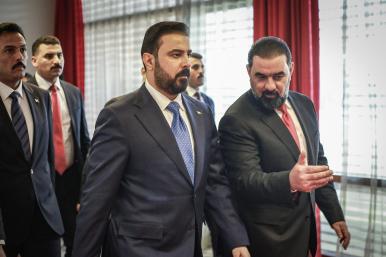
Haibat al-Halbousi (R), Speaker of the Iraqi Parliament, welcomes Iraqi Prime Minister-designate Ali al-Zaidi (L) at the parliament building ahead of a parliamentary session for a confidence vote on the cabinet formed by al-Zaidi - source: Reuters
Articles & Testimony
Mr. Al-Zaidi Goes to Washington
Despite significant progress, Iraq still has a long way to go to meet the Trump administration’s expectations for reining in Iranian influence.
Jul 13, 2026
◆
  • David Schenker
Brief Analysis
$300 Billion for Iran? Don’t Expect Much Impact
The heftiest portion of the theoretical financial windfall discussed in the U.S.-Iran agreement is unlikely to materialize, let alone have a big economic or political impact inside the Islamic Republic.
Jul 7, 2026
◆
  • Patrick Clawson
A photo illustration depicts Israeli and Palestinian flags - source: Reuters
Articles & Testimony
Abolishing Lebanon’s ‘Anti-Normalization’ Laws: A Prerequisite for Peace
Recent Lebanese media engagement with Israelis is a welcome sign, but U.S. mediators should let this organic trend gain momentum for the time being rather than pressuring Beirut to make immediate legislative changes.
Jul 1, 2026
◆
  • David Schenker
Moroccan flags fly in front of a mosque in Rabat - source: Reuters
Brief Analysis
How Morocco’s Religious Rehabilitation Model Could Help Gaza
Although local religious and social differences would present some obstacles, the proven exportability of Rabat’s deradicalization machinery and the kingdom’s good working relations with the Israeli government make it an intriguing candidate for inclusion in the wider Gaza stabilization effort.
Jul 1, 2026
◆
  • Salma Annasse
A protester holds a #FreeIran banner in Berlin - source: Reuters
Articles & Testimony
Trump Told Iranians to Keep Protesting. Then He Abandoned Their Cause.
With the regime still in place, the war has left ordinary Iranians worse off, and U.S. policy has compounded their sense of abandonment.
Jun 16, 2026
◆
  • Holly Dagres
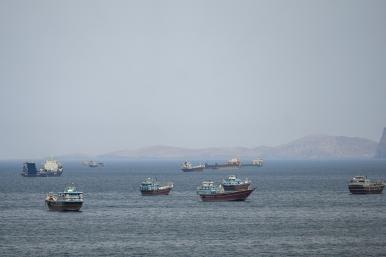
Ships and boats await passage in the Persian Gulf - source: Reuters
Articles & Testimony
A Deal Could Leave Iran Fatally Weakened
The Trump administration won’t achieve all of its war goals, but it could still notch a strategic win with time.
Jun 8, 2026
◆
  • Dennis Ross
Brief Analysis
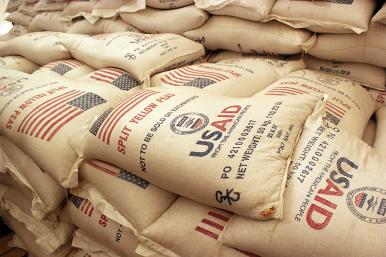
Rethinking Foreign Assistance Cuts That Endanger U.S. Interests
Despite President Trump’s transformative goals in the Middle East and the ongoing need for American help in weathering multiple regional crises, the new budget request doubles down on a range of problematic funding cuts.
Jun 8, 2026
◆
  • Alina Romanowski
  • Ben Fishman
  • Michael Jacobson
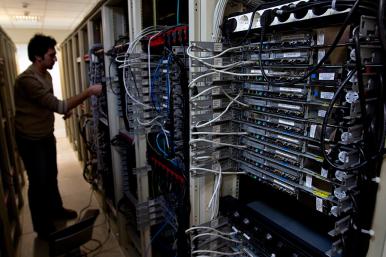
A man manipulates cables on a bank of internet data servers - source: Reuters
Articles & Testimony
Iran’s Next Internet Blackout Is Inevitable
Flipping the kill switch is a potent exercise of authoritarian control, but expediting countermeasures like D2C can help prevent regimes from using this tactic in the future.
Jun 5, 2026
◆
  • Holly Dagres
Photo of Syrians holding a memorial protest for family members killed by the former Assad regime.
Brief Analysis
Syria’s Protest Wave: A Governance Stress Test
Washington should treat the recent public discontent not as a sign that Syria’s transition is failing, but as an opportunity to help ensure that Damascus does not repeat the mistakes of previous governments.
Jun 3, 2026
◆
  • Aaron Y. Zelin
Haibat al-Halbousi (R), Speaker of the Iraqi Parliament, welcomes Iraqi Prime Minister-designate Ali al-Zaidi (L) at the parliament building ahead of a parliamentary session for a confidence vote on the cabinet formed by al-Zaidi - source: Reuters
Brief Analysis
Tempering U.S. Expectations About Iraq’s New Government
Tehran seems just as enthusiastic about the new prime minister as Washington—a telling sign that the militia-dominated status quo in Baghdad will be difficult and slow to change, if it changes at all.
May 28, 2026
◆
  • David Schenker
Oil wells sit idle in Syria - source: Syrian Petroleum Company
Brief Analysis
The Politics Blocking Syria’s Energy Recovery
Washington’s message to Syrian officials should be simple: foreign energy capital is unlikely to flow quickly as long as the outside world sees their government as an opaque regime with unclear authority, factional infighting, uncertain legal protections, and unresolved military tensions with powerful neighbors.
May 27, 2026
◆
  • Andrew J. Tabler
Syrian President Ahmed al-Sharaa places his signature at a cabinet meeting in Damascus, October 12, 2025.
Brief Analysis
Syria’s New Government Appointments: More Continuity Than Change
The years that President Sharaa’s circle spent managing Idlib province now look less like improvised wartime governance and more like a deliberate long-term project to build the cadres of a future state.
May 22, 2026
◆
  • Aaron Y. Zelin

Pagination

  • Current page 1
  • Page 2
  • Page 3
  • Page 4
  • Page 5
  • Page 6
  • Page 7
  • Page 8
  • Page 9
  • …
  • Last page Last »
  • Next page Next ›
Supported by the

Project Fikra: Defeating Extremism through the Power of Ideas

Fikra n. [Arabic] "Idea"

The Washington Institute's Project Fikra is a multiyear program of research, publication, and network-building designed to generate policy ideas for promoting positive change and countering the spread of extremism in the Middle East.

Sign Up for Email Updates from The Washington Institute

Never miss a breaking event on U.S. policy interests in the Middle East. Customize your subscription to our expert analysis, op-eds, live events, and special reports.


Sign up

Featured experts

Catherine Cleveland
Catherine Cleveland
Catherine Cleveland is The Washington Institute's Croft-Wagner Family Senior Fellow and managing editor of Fikra Forum.
Ben Fishman
Ben Fishman
Ben Fishman is the Susan and Leonard Feinstein Senior Fellow in the Linda and Tony Rubin Program on Arab Politics at The Washington Institute, where he focuses on North Africa.
Background image with TWI branding
logo
wordmark
Homepage

1111 19th Street NW - Suite 500
Washington D.C. 20036
Tel: 202-452-0650
Fax: 202-223-5364

Footer contact links

  • Contact
  • Press Room
  • Subscribe

The Washington Institute seeks to advance a balanced and realistic understanding of American interests in the Middle East and to promote the policies that secure them.

The Institute is a 501(c)3 organization; all donations are tax-deductible.

Footer quick links

  • About TWI
  • Support the Institute
  • Alumni

Social media

  • The Washington Institute on Facebook facebook
  • The Washington Institute on X x
  • The Washington Institute on YouTube youtube
  • The Washington Institute on LinkedIn linkedin

© 2026 All rights reserved.

Footer

  • Employment
  • Privacy Policy
  • Rights & Permissions