TWI logo The Washington Institute for Near East Policy
logo
wordmark
Homepage

Main navigation

  • Analysis
  • Experts
  • About
  • Support
  • Maps & Multimedia
Trending:
  • Arab-Israeli Relations
  • Military & Security
  • Israel
  • Iran
  • Syria

Regions & Countries

  • Egypt
  • Gulf States
  • Iran
  • Iraq
  • Israel
  • Jordan
  • Lebanon
  • Middle East
  • North Africa
  • Palestinians
  • Syria
  • Turkey

Issues

  • Arab & Islamic Politics
  • Arab-Israeli Relations
  • Democracy & Reform
  • Energy & Economics
  • Great Power Competition
  • Gulf & Energy Policy
  • Military & Security
  • Peace Process
  • Proliferation
  • Terrorism
  • U.S. Policy
TWI English
TWI Arabic: اللغة العربية Fikra Forum

Breadcrumb

  • Policy Analysis

Military & Security

Policy Analysis on Military & Security

Filter by:

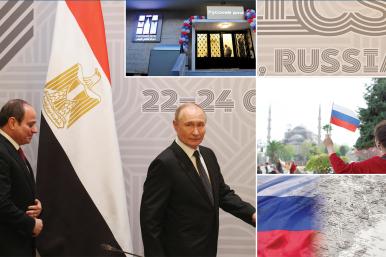
Montage: Presidents Sisi (Egypt) and Putin (Russia) at the 2024 BRICS summit; a woman holds a Russian flag in Istanbul; a Russia House cultural center in Syria; a map image superimposing Russian flag over Africa/Middle East.
Maps & Graphics
In-Depth Reports
After Ukraine:
Prospects for a Russian Resurgence in the Middle East
Moscow has cultivated ties with U.S. adversaries and allies alike, and Washington must respond by advancing a holistic policy that empowers Ukrainian commercial interests and addresses deficits in sanctions policy.
Jan 23, 2026
◆
  • Anna Borshchevskaya
  • Matt Tavares
Brief Analysis
Kurdish Collapse in Northeast Syria? Key Things to Watch
Washington Institute experts assess the immediate fallout of the Syrian government’s advance into SDF-held parts of the northeast, including mutual disinformation campaigns, implications for the Islamic State threat, the terms of new agreements with the Kurds, and the calculus of outside actors like the United States, Israel, and Turkey.
Jan 21, 2026
◆
  • Andrew J. Tabler
  • James Jeffrey
  • Devorah Margolin
  • Aaron Y. Zelin
  • Soner Cagaptay
  • Zohar Palti
  • Assaf Orion
A photo illustration of a bust of President Trump and an Iranian flag - source: Reuters
Video
Brief Analysis
Iran Endgame? Protests, Repression, and the Trump Administration
Three experts discuss the rapidly changing situation in Iran, including the status of opposition elements on the ground, the U.S. interests at play in the crisis, and Washington’s policy options for bolstering both.
Jan 16, 2026
◆
  • Holly Dagres
  • Michael Eisenstadt
  • Richard Nephew
A man carries a Somilaland flag in a parade in Hargeisa - source: Reuters
Brief Analysis
Recognizing Somaliland: Israel’s Return to the Red Sea
Israel’s agreement with Somaliland will boost its security in the Red Sea Basin and may encourage the United States and other countries to follow suit, though political obstacles and complications abound.
Jan 16, 2026
◆
  • Ehud Yaari
A protester holds a #FreeIran banner in Berlin - source: Reuters
Brief Analysis
Iran at a Watershed Moment? The Case for Meaningful U.S. Action
Acting now offers the best chance to halt atrocities and shape a peaceful transition, while waiting would only ensure that the next phase of the crisis is bloodier for Iranians, more dangerous for the region, and more difficult to influence.
Jan 13, 2026
◆
  • Farzin Nadimi
  • Patrick Clawson
Russian President Vladimir Putin meets Chinese President Xi Jinping at a summit in Beijing - source: Reuters
Brief Analysis
Iran’s Failing Eastward Pivot? The Limits and Risks of Russia-China Alignment
Since the June war, Tehran has hastily doubled down on Russian and Chinese partnerships to weather sanctions and deter future attacks, but Moscow and Beijing are hesitant to invest deeply in return—and Washington should make sure they stay that way.
Dec 30, 2025
◆
  • Farzin Nadimi
Middle East Crises book cover
In-Depth Reports
Middle East Crises: Expeditionary Diplomacy with the Bush, Obama, and Trump Teams
A veteran American diplomat offers a compelling, first-hand account of U.S. foreign policy and crisis management in the Middle East from 2004 to 2020.
Dec 30, 2025
◆
  • James Jeffrey
Map showing areas of control in Yemen after the December 2025 offensive by STC-aligned forces.
Maps & Graphics
Brief Analysis
Yemen’s Seismic Shift Has Consequences Beyond Its Borders
U.S. allies Saudi Arabia and the UAE are on a collision course in Yemen, as local forces threaten to reopen a war that could boost the Houthis, deepen Red Sea instability, and otherwise undermine the Trump administration’s Middle East goals.
Dec 22, 2025
◆
  • April Longley Alley
Houthi fighters rally in Sanaa, Yemen
Articles & Testimony
The Middle East’s Most Overlooked Threat
The Houthis, STC, and other players are making moves that could spark a new civil war in Yemen, potentially upending the perceived balance of power ushered in by the Gaza truce.
Dec 18, 2025
◆
  • April Longley Alley
Lebanon's President, Joseph Aoun, meets with his Cabinet in November 2025 - source: Reuters
Brief Analysis
The U.S.-French Mechanism 2.0: Preventing Escalation Between Lebanon and Israel
Strong outside supervision over Lebanon’s implementation of the Hezbollah disarmament plan could help forestall looming Israeli military escalation and protect recent diplomatic milestones on the road toward an eventual peace treaty.
Dec 11, 2025
◆
  • Souhire Medini
Brief Analysis
Salvaging the Lebanon Ceasefire Amid Looming Deadlines and Threats of War
Washington and its allies are waiting for Beirut to acknowledge the difficult but unavoidable truth: that war will resume unless serious action is taken to target all the pillars of Hezbollah’s power, bolster Shia political alternatives, and otherwise satisfy the ceasefire’s most important requirement: disarming the group.
Dec 2, 2025
◆
  • Hanin Ghaddar
  • Assaf Orion
Saudi Deputy Crown Prince Mohammed bin Salman meets with Chinese President Xi in Beijing in 2019 - source: Reuters
Brief Analysis
Unpacking the China File in U.S.-Saudi Relations
As the Saudi crown prince visits Washington, the United States should use the occasion—as well as American leverage—to roll back China’s influence in the country.
Nov 18, 2025
◆
  • Grant Rumley
Brief Analysis
Perspectives on Muhammad bin Salman’s Visit to Washington
Washington Institute experts discuss each government’s likely agenda for the landmark visit, from dealmaking in the energy and AI sectors to deepening the bilateral defense relationship and taking the difficult next steps in the fragile Gaza ceasefire plan.
Nov 14, 2025
◆
  • Dennis Ross
  • Elizabeth Dent
  • April Longley Alley
  • Simon Henderson
  • Henry Tugendhat
  • Noam Raydan
The national flags of China and Iran fly in Tiananmen Square during Iranian President Ebrahim Raisi's visit to Beijing, China, February 14, 2023 - source: Reuters
Articles & Testimony
Seven Sons and Mullahs: Chinese-Iranian Defense-Linked Academic Collaboration
Recent academic output from both countries reveals joint research efforts in numerous military-related fields and some convergence between their defense innovation ecosystems, posing potential risks to the United States and its partners.
November 2025
◆
  • Assaf Orion
  • Jacob Sanchez
Articles & Testimony
A New Path to Middle East Security: How American Commitments in the Gulf Can Rebuild the Regional Order
The Trump administration’s full-throated assurance of support for Qatar and willingness to pressure Israel on key issues could set a new benchmark for U.S. security relationships with the Gulf countries.
Nov 13, 2025
◆
  • James Jeffrey
  • Elizabeth Dent
Image showing a route taken by the ship Maersk Chicago.
Maps & Graphics
Brief Analysis
Houthi Maritime Threats and the Gaza Truce: Why Disrupting Supply Chains Is Indispensable
Despite the recent (and likely temporary) pause in ship attacks, various factors point to an enduring threat that will not dissipate until wider action is taken against the group’s far-reaching procurement networks.
Nov 12, 2025
◆
  • Noam Raydan
Hamas leader Khalil al-Hayya, speaks during a press conference in Gaza City, on February 3, 2021 - source: Reuters
Brief Analysis
Hamas’s “Rigid Pragmatism”: Between Tactical Flexibility and Ideological Intransigence
Gaza stabilization must include precise disarmament rules, independent monitoring, and pressure from Egypt, Qatar, and Turkey to counter Hamas’s blend of flexibility and intransigence.
Nov 10, 2025
◆
  • Neomi Neumann
Brief Analysis
Iran’s Self-Confidence Returns?
Leaders in Tehran are saying they won the June war and can stand up to Israel, leaving U.S. policymakers with the tricky task of how to stand up to Iran.
Nov 4, 2025
◆
  • Patrick Clawson
Brief Analysis
Gaza’s Future Hinges on a Clear UN Security Council Resolution
With Hamas already regrouping, U.S. officials must help craft targeted language that empowers the Board of Peace to oversee a technocratic administration and stabilization force, with the goal of quickly filling the territory’s governance and security vacuum.
Oct 31, 2025
◆
  • Dennis Ross
  • Assaf Orion
Brief Analysis
China’s Push for Satellite Cooperation in the Middle East
By investing in relationships with scientists in the region, Beijing is seeking to fortify its own BeiDou system and drive growth, offering potential lessons for Washington.
Oct 20, 2025
◆
  • Henry Tugendhat

Pagination

  • Current page 1
  • Page 2
  • Page 3
  • Page 4
  • Page 5
  • Page 6
  • Page 7
  • Page 8
  • Page 9
  • …
  • Last page Last »
  • Next page Next ›
Supported by the

Military and Security Studies Program

The Washington Institute's Military and Security Studies Program has established itself as an unrivaled source of reliable, incisive, and forward-looking analysis concerning several of the most critical national-security challenges facing the United States today: The U.S. military role in the Middle East, Iran's nuclear program and its proxy armies, the ongoing conflict is in Iraq, Lebanon, Syria, and Yemen, the regional proliferation of missiles and weapons of mass destruction, the security dimensions of the Arab-Israeli conflict, and many other security issues on the frontline of the U.S. policymaking agenda.

Sign Up for Email Updates from The Washington Institute

Never miss a breaking event on U.S. policy interests in the Middle East. Customize your subscription to our expert analysis, op-eds, live events, and special reports.


Sign up

Featured experts

Michael Eisenstadt
Michael Eisenstadt
Michael Eisenstadt is the Kahn Senior Fellow and director of The Washington Institute's Military and Security Studies Program.
Grant Rumley
Grant Rumley
Grant Rumley is the Meisel-Goldberger Senior Fellow and Director of the Diane and Guilford Glazer Foundation Program on Great Power Competition and the Middle East at the Washington Institute for Near East Policy.
Elizabeth Dent - source: The Washington Institute
Elizabeth Dent
Elizabeth Dent is the Nathan and Esther K. Wagner Senior Fellow at the Washington Institute for Near East Policy, where she focuses on U.S. foreign and defense policy toward the Gulf states, Iraq, and Syria.
Background image with TWI branding
logo
wordmark
Homepage

1111 19th Street NW - Suite 500
Washington D.C. 20036
Tel: 202-452-0650
Fax: 202-223-5364

Footer contact links

  • Contact
  • Press Room
  • Subscribe

The Washington Institute seeks to advance a balanced and realistic understanding of American interests in the Middle East and to promote the policies that secure them.

The Institute is a 501(c)3 organization; all donations are tax-deductible.

Footer quick links

  • About TWI
  • Support the Institute
  • Alumni

Social media

  • The Washington Institute on Facebook facebook
  • The Washington Institute on X x
  • The Washington Institute on YouTube youtube
  • The Washington Institute on LinkedIn linkedin

© 2026 All rights reserved.

Footer

  • Employment
  • Privacy Policy
  • Rights & Permissions