Ideas. Action. Impact. The Washington Institute for Near East Policy The Washington Institute: Improving the Quality of U.S. Middle East Policy

Other Pages

Our Experts: Senior Fellows


Also available in العربية

Download High-Resolution Photograph

Michael Eisenstadt

Senior Fellow
Director, Military & Security Studies Program

Tel: 202-230-9550 (media inquiries only) 202-452-0650 (all other inquiries)
press@washingtoninstitute.org

Michael Eisenstadt is a senior fellow and director of The Washington Institute's Military and Security Studies Program.

Areas of Expertise

Iran, Iraq, Israel, Persian Gulf States , Military and Security

Back to Top


Current Research

Implications of a nuclear Iran; Iranian influence in Iraq; irregular/hybrid warfare; U.S. policy toward Iraq; the utility of force in the Arab-Israeli conflict.

Back to Top


Biography

Michael Eisenstadt is a senior fellow and director of The Washington Institute's Military and Security Studies Program. A specialist in Persian Gulf and Arab-Israeli security affairs, he has published widely on irregular and conventional warfare, and nuclear weapons proliferation in the Middle East.

Prior to joining the Institute in 1989, Mr. Eisenstadt worked as a military analyst with the U.S. government.

Mr. Eisenstadt served for twenty-six years as an officer in the U.S. Army Reserve before retiring in 2010. His military service included active-duty stints in Iraq with the United States Forces-Iraq headquarters (2010) and the Human Terrain System Assessment Team (2008); in Jerusalem, the West Bank, and Jordan with the U.S. Security Coordinator (USSC) for Israel and the Palestinian Authority (2008-2009); at U.S. Central Command headquarters and on the Joint Staff during Operation Enduring Freedom and the planning for Operation Iraqi Freedom (2001-2002); and in Turkey and Iraq during Operation Provide Comfort (1991).

He has also served in a civilian capacity on the Multinational Force-Iraq/U.S. Embassy Baghdad Joint Campaign Plan Assessment Team (2009) and as a consultant or advisor to the congressionally mandated Iraq Study Group (2006), the Multinational Corps-Iraq Information Operations Task Force (2005-2006), and the State Department's Future of Iraq defense policy working group (2002-2003). In 1992, he took a leave of absence from the Institute to work on the U.S. Air Force Gulf War Air Power Survey.

Back to Top


Education

Mr. Eisenstadt earned an MA in Arab Studies from Georgetown University and has traveled widely in the Middle East. He speaks Arabic and Hebrew, and reads French.

Back to Top


Languages Spoken / Read

  • Arabic
  • French
  • Hebrew

Back to Top


Publications

The Missing Lever:

March 1, 2010

Policy Notes, Books

The Last Resort: Consequences of Preventive Military Action against Iran

June 12, 2008

Policy Focus, Policy Series, Books

Back to Top


Most Recent Analysis

Investigating Alleged Chemical Weapons Use in Syria: Technical and Political Challenges

April 26, 2013

Israel's High-Tech Pipeline to America

March 22, 2013

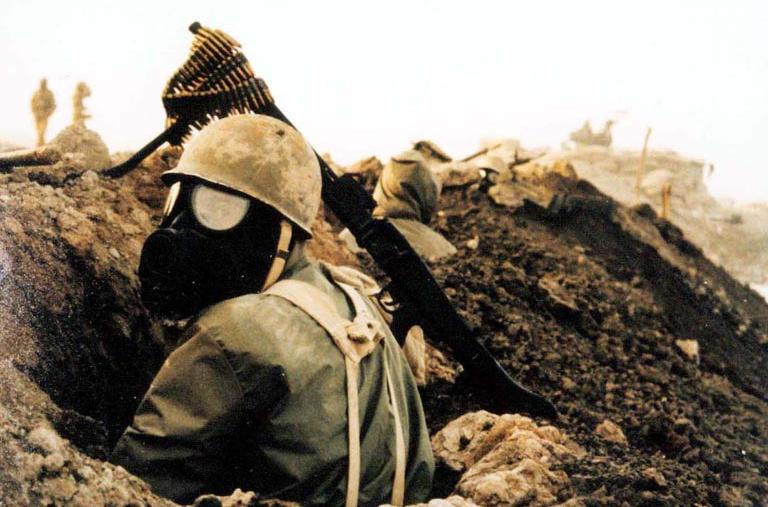
What Are Chemical Weapons and How Would Syria Use Them?

March 21, 2013

Forget the Fatwa

March 14, 2013

Missile Defense and the Islamic Republic of Iran:

Contribution to Deterrence, Defense, and Crisis Stability

March 11, 2013

Getting Carrier Out of the Gulf Good for U.S. Iran Policy

March 10, 2013

Asset Test: What Israel Brings to the U.S.-Israel Alliance

February 27, 2013

The Iran Primer: Power, Politics, and U.S. Policy

February 27, 2013

Asset Test: New Strategic and Economic Dimensions of U.S.-Israeli Relations

February 6, 2013

Infographic: Asset Test

How the United States Benefits from Its Alliance with Israel

January 30, 2013

See all analysis by this author